

SANTA MARTA PROCESS
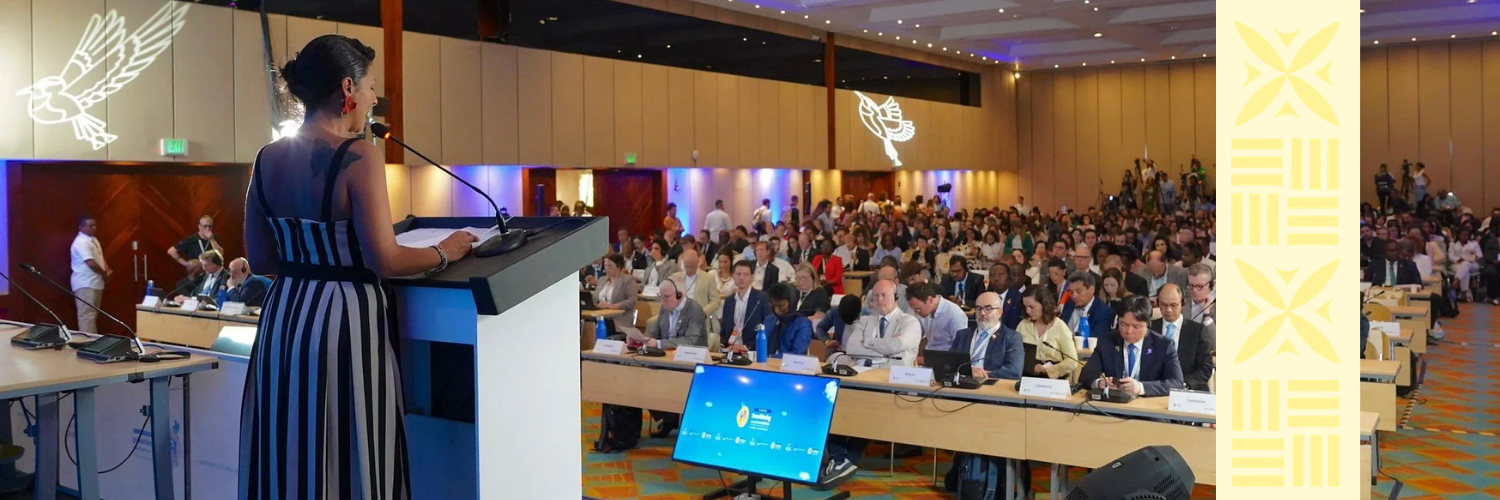
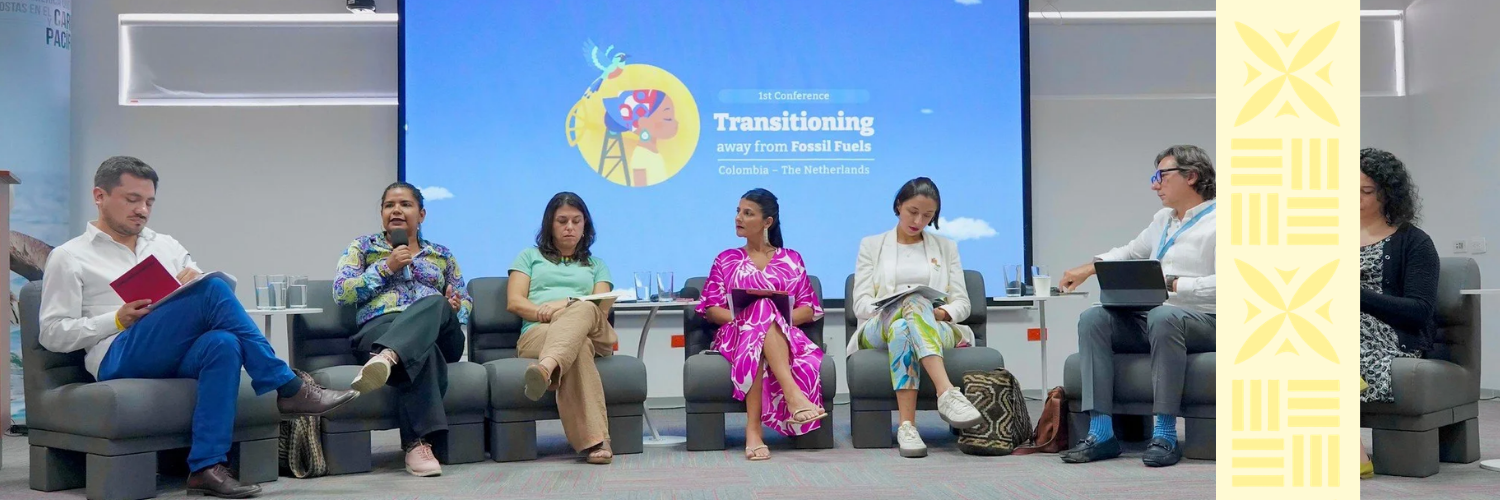
From 24 to 29 April 2026, Colombia and the Netherlands co-hosted the 1st International Conference on Transitioning Away from Fossil Fuels. The conference, held in the coal port city of Santa Marta, convened 57 countries and more than 1000 representatives of key sectors and non-state actors to advance the transition away from fossil fuels.
Over the course of five days, countries and representatives from 14 sectors created a historic platform for dialogue and action on advancing a just, orderly, and equitable transition away from fossil fuels.
The next steps in the Santa Marta Process will aim to translate this dialogue to concrete action and international cooperation, in the lead up to the 2nd International Conference on the Just Transition Away from Fossil Fuels in 2027. The second conference is a testament to the sustained commitment to advance the transition, which was evident from all participants.
The Santa Marta Vision
Based on the input from all participants ahead of and during the First Conference, Colombia and the Netherlands have developed a ‘Santa Marta Vision’ for Transitioning Away from Fossil Fuels. It contains ten key points (see below).
-
It is essential to achieve the goals of the Paris Agreement and keep a 1.5°C future within reach. It is also essential to respond to current economic, social, and geopolitical shocks while building long-term energy security, resilience, and a basis for economic prosperity that is grounded in social and environmental sustainability.
-
Meaningful progress often begins with a small group prepared to move forward. Collective action should be grounded in shared objectives while recognizing different national and territorial realities. Ambition and inclusiveness can advance together when countries cooperate around practical solutions and mutual support.
-
These favorable conditions include falling renewable energy costs, technological innovation, and growing experience with implementation. Yet, opportunities and benefits remain unevenly distributed. Ensuring that all countries and communities can benefit requires stronger governance, international cooperation, and reforms to address barriers and implementation, to generate further ambition.
-
It is a broad economic, political, social, and institutional transformation, from the global to the local level, to overcome structural dependencies. It involves governance systems, local knowledge, existing decision-making processes, and looking at financial flows, sectoral dynamics, value chains, and development pathways. It therefore requires whole-of-government and whole-of-society approaches capable of aligning public and private action around long-term transformation.
-
To accelerate the transition and expand easy, affordable, and reliable clean alternatives, a wide range of policies and instruments need to be implemented in a coherent manner – from extraction, processing and consumption of fossil fuels to the transformation of end-use sectors. Strategic planning, industrial policy, robust economic diversification, technological development, innovation, and international cooperation are all part of the solution.
-
Locallyled solutions already exist and must be recognized, strengthened, and scaled. The transition should not reproduce inequalities within or between countries, nor create new forms of extractivism or dependence. It should help economies and communities move towards value chains of higher quality and new economic models, and towards more resilient and inclusive development pathways, for more equitable, sustainable, and resilient societies.
-
Progress depends on system-wide coherence. At the heart are new or strengthened national or regional TAFF roadmaps, aligned with 1.5°C, that signal clear direction, to markets as well as domestic and international partners. This needs to be coupled with additional work on sustainable trade flows and advance green economic transformation. Pooling capacities, knowledge and resources across countries can generate significant synergies and speed-up progress.
-
Countries willing to accelerate the transition currently face conditions that differ. For some, addressing debt burdens, high costs of capital, limited fiscal space, technological barriers and investment frameworks are essential. Accelerated deployment of Multilateral Development Banks (MDB) support, expanded non-debt-creating finance, technology transfer and capacity building are ways to do so. Financial flows continue to be unaligned, and in most countries fossil fuel subsidies and misaligned financial incentives keep fossil fuels artificially competitive. Identifying these incentives and subsidies is necessary, for example through the publication of national inventories. Likewise, research on how to reform these is essential to advance progress towards phasing out fossil fuel subsidies.
-
Complementarity with UNFCCC processes and other existing governance frameworks is critical to avoid duplication. Future work following the first conference will aim to defragment efforts, and ensure alignment with existing initiatives, including the Beyond Oil and Gas Alliance (BOGA), the Powering Past Coal Alliance (PPCA), and the Clean Energy Transition Partnership (CETP). Countries working together can also contribute to advancing work in related processes, including the International Panel on Climate Change (IPCC), the International Maritime Organization (IMO), and the UN Plastics Treaty. Progress in these areas will likewise benefit the global transition away from fossil fuels. The same goes for optimization of instruments from multilateral development banks and international financial institutions, among others. It will be equally important to address existing governance and implementation gaps through additional mechanisms, initiatives and agreements.
-
Progress is already underway. Accelerating change requires catalytic forms of cooperation to match the scale of the challenge. By bringing together governments and a broad coalition of stakeholders, the first Conference on Transitioning Away from Fossil Fuels advanced solution-oriented cooperation. With plurilateral action, grounded in multilateral consensus, we can build the practical pathways to move forward together.
Five Pathways
The pathways show the way towards a just, orderly and equitable transition away from fossil fuels, towards green economic transformation. Together, the collective power of an open, flexible, and broad coalition of doers can overcome the remaining challenges and barriers. It is no longer a question whether the transition away from fossil fuels will happen, but how it will be organized, governed, financed, and made fair across different national and territorial realities.
-
Actions:
A sustained commitment to deliver: the TAFF process and methodology
Supporting Actors:
A dedicated Coordination Group, composed of TAFF host nations
All TAFF participants
Deliverables:
Second Conference for Transitioning Away from Fossil Fuels
TAFF Conference methodology
Intersessional workplan
The dissemination of the TAFF-1 Conference Report across vital international processes and forums
TAFF outcomes are aligned to the UNFCCC Climate Champion’s Global Climate Action Agenda 2026-2030
TAFF coalition channel contributions towards the second Global Stocktake (GST2)
-
Actions:
Strengthening connections, avoiding duplication and channeling our collective power
Supporting Actors:
A dedicated Coordination Group, composed of TAFF host nations
All UNFCCC Parties
All TAFF participants
Deliverables:
Sustain and strengthen momentum on TAFF
-
Actions:
Design, planning and implementation of science- and rights-based roadmaps for a socio-economic and energy transition and just workforce development, anchored in sustained economic diversification and new value chains
Switching fossil fuels for clean energy, energy security and sovereignty
Access to clean energy for rural, remote and marginalized communities
Plan the phase down and definitive closure of fossil fuel extraction
Supporting Actors:
Technical support from the Scientific Panel for the Global Energy Transition (SPGET) and NDC Partnership
Ministries of Finance and Energy
Governments, subgovernments and cities
The other two workstreams
Deliverables:
Input to TAFF-2 for continued cooperation
-
Actions:
Strengthening sovereign transition capacity by overcoming macro-economic dependencies and expanding fiscal space, including transformative action on tax and debt
Unlocking finance and investment flows required for the transition and closing gaps in financial and investment systems, including by accelerating and scaling-up deployment of IFI and DFI finance and addressing national and international financial architecture barriers
Reforming Subsidies and aligning financial incentives with the energy transition, including by: enhancing transparency and phasing out fossil fuel incentives, stimulating the transition.
Supporting Actors:
IISD
Ministries of Finance and Energy
Central Banks MDBs and IFIs
COFFIS
Deliverables:
Input to TAFF-2 for continued cooperation
Support other workstreams
-
Actions:
Align producers and consumers for transitioning away from fossil fuels, advance towards fossil fuel-free trade flows and supporting the green transformation
Address governance gaps of international investment systems
Supporting Actions:
Technical support from OECD
South Center
Countries
The other work-teams
Deliverables:
Input to TAFF-2 for continued cooperation
Support other workstreams